Industrial Sirens and Sounding Devices: A Must for Business Safety
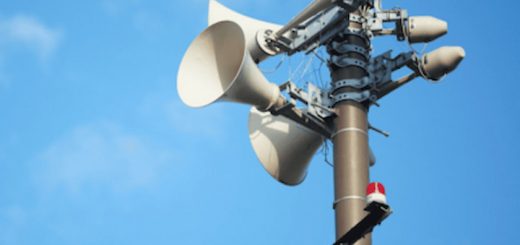
Sirens and sounders are the principal means of emergency notification currently used in Australian commercial, industrial and institutional facilities. That’s because where various forms of visual, manual and even electronic notification systems can be misinterpreted or possibly fail altogether in an emergency, sirens and sounders don’t leave any ambiguity. Their messaging is clear and straightforward: a potentially life-threatening situation exists and a very specific set of actions need to be taken immediately.
Trust Modern Sirens and Sounders For Lifesaving Awareness
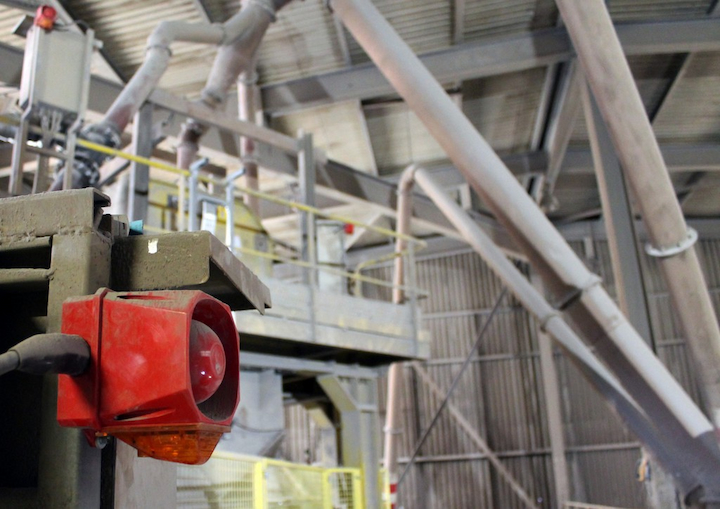
Let’s be honest: when it comes to emergency notifications, there’s no question why high-decibel industrial siren and sounding devices are consistently regarded as the most effective warning systems. While other warning devices can be difficult to distinguish, or even impossible to recognise in an emergency, sirens and sounders are capable of producing persistent, unmistakable outputs to 130dB, with effective distances from 200m – 300m. That makes them perfect notification devices for integration with a wide array of emergency warning systems, including:
- Smoke, carbon monoxide and fire alarms;
- Biological, chemical vapour, and toxic gas leak detectors;
- Mass notification, active threat and severe weather notifications;
- Industrial equipment status, warning and guide signalling; and,
- Motion detection, and entryway security alarms.
With their choice of either line-of-sight or omni-directional coverage, modern industrial sirens and sounders are designed to spur maximum awareness in situations where ambient noise, visual impairments and even general confusion could result in catastrophic property damage or loss of life. And as few such situations are as potentially devastating as when there’s a fire risk, few types of alarm sirens and sounders are more specialised, or designed to produce a clearer or more powerful output than today’s top end fire warning devices.
Sirens and Notification Systems That Provide Maximum Versatility
It’s a fact: with fire accounting for more than 20% of all emergency incidents attended to by Australia’s State and Territory Emergency Services (STES), fire events are consistently the country’s most persistent threat to homes, businesses, public spaces and bushland. It’s also a fact that every fire event also brings a range of secondary risk- and hazard-based scenarios that can include everything from the accumulation of flammable gases and soot, to the uncontrolled release and reaction of toxic or explosive chemicals.
Every fire event is different, which is why in addition to their robust IP65 and IP66 construction and standard service temperature windows from -30°C to 70°C, the fire alarm sirens and sounders sold in Australia also have to be adaptable to a wide range of risks that can evolve rapidly. As such, you have:
- Rugged motorised sirens. With their long life and exceptionally long run times, severe-duty motorised fire sirens are designed especially to deliver high output 360° general safety warnings in either indoor and outdoor environments, and are preferred for dusty, extreme weather conditions like those found in mines and quarries.
- Industry favoured sounder beacons. With their choice of base and lens colours, weatherproof fire sounder beacons are 2-in-1 audible and visual warning devices with a 32-tone programming independent of the device’s beacon – a favourite of industries, warehouses, and retail and commercial facilities.
- Versatile electronic tone sounders. Electronic fire alarm sounders represent the latest innovation in fire warning hardware. Electronic fire sounders utilise amplifier technology to produce up to 64-tone outputs, allowing them to operate with even greater versatility than ordinary sounder beacons, but with a far lower power consumption rate.
The unmatched survivability and flexibility of modern fire sirens, alarms and sounders combine to give any advanced warning system the wide-area notification capacity that’s needed to save lives in an emergency. And their capacity to deliver either layered or staged fire alarm notifications is the perfect complement for both public and private AS1670- and AS2220-compliant emergency notification systems designed for the following:
- Contingency-specific notifications. Combined fire alarm sounder beacon systems allow safety and facility managers to create custom audible, visual, and even electronic notifications which, in addition to fire, can be programmed to include any number of emergency contingencies.
- Temporal- and location-related notifications. While all industrial, commercial and home alarm sirens rely on maximum coverage, facilities like hospitals and nursing homes require temporal notification systems that alert key staff members first. This is an urgent fire alarm sounder beacon feature designed to prevent unnecessary panic, and to signal the activation of planned evacuation procedures.
- Non-stop, high endurance notifications. Although most modern notification systems depend heavily on high-tech alarm devices to get their message out, Klaxon-style, all-weather fire bells are still an option for safety managers who want to buy fire alarms that offer maximum coverage with uninterruptible continuous duty cycles up to 60 minutes.
Regardless of the type of industrial siren or notification system an organisation invests in, it’s the effective distance of the sound they produce that saves lives. This is why strategic siren alarm placement is as important as big decibel outputs, and why organisations also need to base their siren and sounder purchasing choices on their available placement options.
Making Proper Alarm Siren Placement A Priority
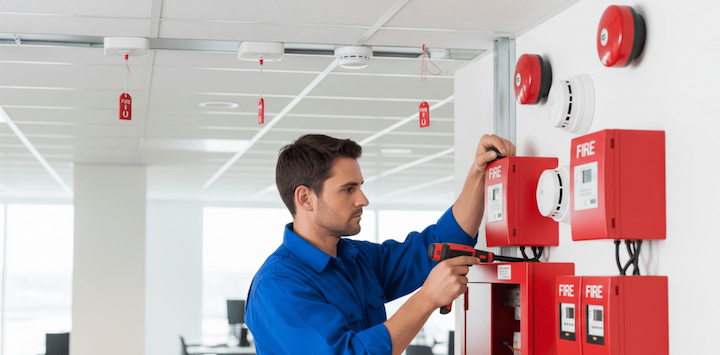
Make no mistake: while it’s easy to get distracted by the tendency to buy fire alarm devices based on how loud they are, businesses and safety officers have to consider how much increasing a device’s decibel level also affects its volume. An increase of only 3 decibels in a device’s output is equivalent to doubling its volume, and organisations have to be mindful of how these factors are affected by ambient background noise over given distances, even when using multiple alarm devices.
Siren and sounder placement also has an impact on volume, and businesses and facility managers have to assess and prioritise the following when installing their devices:
- Whether the alarm should be mounted on a wall or pillar. Not only do wall-mounted sirens and sounders offer better acoustic dissipation than pillar-mounted devices, they’re also not subject to reflective bounce and easier to maintain.
- How close the alarm should be mounted to an adjoining wall or ceiling. Mounting alarm devices as close as possible to the point of intersection between a wall and ceiling ensures maximum sound reflection, thereby also ensuring greater sound distance.
- Eliminating any obstacles positioned in front of the alarm. Alarm devices should never be mounted where their output can be dampened by forward-facing obstacles, especially in environments with high ambient noise.
With an understanding of the effective distance an alarm needs to be projected and the volume needed to cover that distance, ensuring proper device placement can help businesses stay safer, and manage their device purchases better than ever.
The Final Word
At the end of the day, regardless of the type of business, safety always has to come first. And as fire consistently poses the biggest risk to all forms of industrial, institutional and residential safety, the alarm devices used with their fire and emergency notification systems have to be the best.
Cutting-edge sirens and sounding devices are the real-time warning devices businesses need for maximum awareness. They’re the obligation to workplace safety that businesses can’t afford to ignore.