6 Types of LED Torches Explained
Made up of diodes and semiconductors, LEDs are the most promising lighting solution of the present and future. They may have been created in the 1920s, but their benefits haven’t been taken advantage of until the early 2000s.
LED lights are best known for their high efficiency and bright beam, which together translate to a long lifespan of around 50,000 working hours. Because of all this, LEDs are used across a wide range of industries, including handheld flashlights, which have seen a significant surge in demand since the first LED torch.
Types of LED Torches
Rechargeable
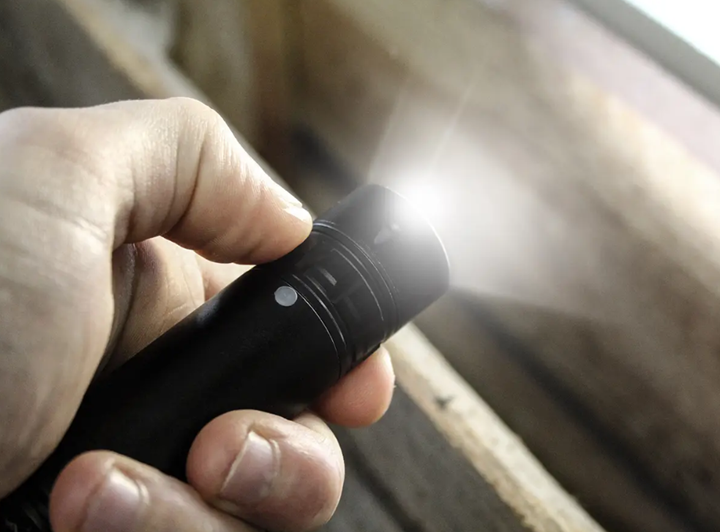
The most commonly used torches nowadays are powered by rechargeable batteries. In the past, this was the case with replaceable batteries, but nowadays, lithium-ion cells are the leading solution as they’re more sustainable and have a reduced carbon footprint. A rechargeable torch for sale is also equipped with USB ports so its batteries can be recharged just about anywhere.
Headlamp
A head torch, or headlamp, is probably the second most popular type of flashlight today because of its practical design. Equipped with adjustable straps, a headlamp makes it easy to explore the outdoors at night or work on your car in low light. This is essentially a hands-free type of LED torch.
EDC
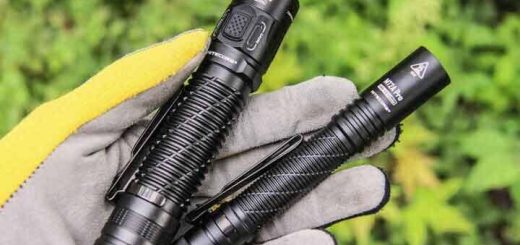
An EDC, or everyday carry torch, is made with usability and portability in mind. These small torches fit in your pocket or on your belt and offer the same capabilities as larger ones. EDC flashlights are quite powerful and have almost every light mode a rechargeable torch has. However, because of this, the former are on the higher end price-wise.
Tactical
Tactical torches offer a powerful and durable handheld lighting solution you can rely on anywhere. Made for the most extreme conditions, they use military-grade materials and features trusted by law enforcement. If you want to increase your chances of surviving in the wild, tactical torches are your best bet.
Penlight
As its name suggests, a penlight combines a pen/marker and a strip of LEDs. While they may not be the most powerful or the most advanced, penlights are ideal for close inspections in small areas. This is the reason why they are mostly used by engineers and healthcare professionals.
Right Angle
While unique in their design and form factor, right angle torches are designed to be placed vertically so that the beam they emit is at 90°. This makes it useful when you need an LED flashlight that you can clip to your gear, belt, pocket or webbing and use hands-free.
What Matters in an LED Torch

Lumens
One of the most determining factors when choosing an LED torch for sale is its lumen count. The higher the number of lumens it can produce, the brighter its beam is and vice versa. However, this doesn’t mean you should get one with the highest lumen count, as you can easily blind people.
Battery
The type of battery a torch uses affects how often and how quickly you need to charge it, as well as how long it lasts on a single charge. Lithium-ion batteries are best suited to slow discharge, fast charging, and less frequent charging than alkaline batteries. The latter are also exclusively replaceable.
Runtime
The runtime, or the period during which you can use the torch before you need to charge it or replace its batteries, varies greatly depending on the type of batteries it comes with. What you should keep in mind is that longer runtimes are better; however, they can contribute to the bulkiness of the torch.
Light Modes
Different light modes offer an advantage in different scenarios. That’s why a torch with multiple modes is what you should look for. Usually, torches have 3 to 4 modes such as low, medium, turbo and moon or strobe mode. Each provides a certain number of lumens, with moon mode being used for map reading and strobe mode for self-defence.
Beam Pattern
The torch’s beam pattern can be flood, spot or adjustable. A flood beam is wide and made for close-range illumination, while a spot beam is narrow and used to light up distant objects. Torches with an adjustable beam pattern let you switch between the two.
Beam Distance
The maximum distance at which the beam of light from the flashlight can illuminate matters more than you think. This is especially important for tactical torches, where the more you get out of it, the better, as a longer maximum beam distance allows you to see much further than with a regular LED torch.
Impact Resistance
To keep an LED flashlight working for a long time, it needs good build quality, usually determined by its impact resistance. Expressed in metres, the higher it is, the better, as it indicates a more rugged torch.
IP Rating
Together with a flashlight’s impact resistance, its IP rating determines its protection from solids and water. Expressed as two letters (IP) or a letter and number (IPX), the higher the rating, the better, as it indicates a higher level of protection.