Choose Quality Mechanical Cable Fitting Assemblies for Structural Integrity
Ask any builder who works with steel rope what their most critical installation element is and they’ll undoubtedly tell you that it’s their choice of mechanical fitting assemblies and components. That’s because even though the tensile strength of a steel rope or cable is determined by its composition, diameter and the type of protective coating it has, the cable’s actual load capacity is based on the holding strength of the fittings being used.
In spite of their near-negligible size, cable fittings are responsible for virtually all the joining, terminating and tensioning that’s performed when steel cables are used. And make no mistake: there’s no way to discuss the reliability of everything from household balustrades to heavy-hoist cranes without also discussing the durability of the mechanical fittings on the cables supporting them.
Cable Fitting Assemblies Made For Complete Structural Integrity
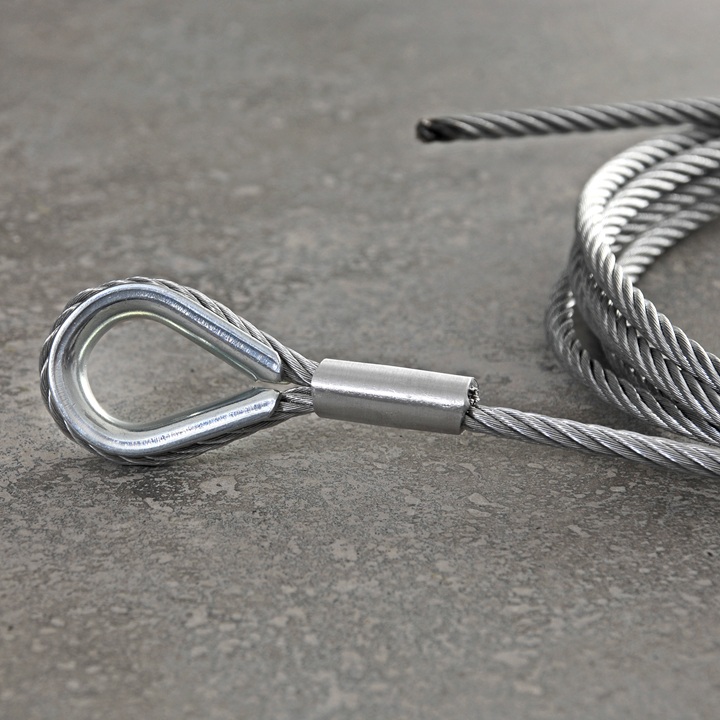
From the simple crimp-type steel ferrules used to connect gym cables, to the P-rated screws and turnbuckles used for heavy duty marine rigging and lashing, no-nonsense mechanical cable wire fitting assemblies are the reason steel ropes and cables can be safely deployed across so many different activities.
Any application where cables are used to reinforce structural integrity relies on mechanical fittings to transfer the force on the cable onto the structure or another load-bearing element. And as a matter of course, every fitting is required to satisfy the same core of rigid standards that are attributed to the cable it’s used with, including:
- Superior resistance to breaking. While steel ropes and cables should never be used beyond their specified Working Load Limit (WLL), the strongest standard mechanical fittings are routinely engineered to support up to 6X their cable’s WLL, with Minimum Breaking Strengths (MBSs) extending up to 30000kg.
- Exceptional resistance to bending. A cable’s ability to resist fatigue, especially when bent, is the key to its MBS. That’s why the mechanical fittings used with any specific cable have to provide sufficient tension to resist bending, as well as prevent the cable itself from bending.
- Stellar resistance to crushing. The shearing-action and fatigue caused by crushing a wire rope can dramatically reduce its MBS. That’s why the same way a cable has to be able to resist cross-sectional crushing damage, the cable wire fittings used with it also need to be able to resist crushing that could cause distortion or failure.
Ideally, builders and contractors aren’t just responsible for ensuring the cables they use are suitable for the conditions, support cycles and working loads they’re being used with. They’re also responsible for making sure the mechanical fittings used with them are appropriately rated, galvanically compatible and correctly installed.
That’s why it’s no surprise there are wire cable fittings designed for every structural and environmental contingency. And fortunately for builders, they don’t have to look any further than online to find out precisely what’s available.
Fitting Styles For All Installed Cable Functions and Contingencies
Mechanical fitting assemblies are manufactured in a wide range of carbon, stainless and alloy steel compounds, with an even wider range of galvanic, powder coated and self-coloured/oil blued finishes. Each of these attributes contributes equally to how well a steel wire fitting can be expected to perform under severe stress in harsh environments.
And depending on the application, the proper combination of these qualities can actually increase the lifespan of steel cables and the cable wire fitting by as much as 50%. There are dozens of different types of mechanical fitting assemblies designed to perform a wide array of tensioning, terminating and securing functions, with the most common variants including:
- Ferrule sleeves and terminations. Sleeves and terminations are the most common types of rope and cable fittings, relying either on ferrule-secured cable loops, or forked, eyeleted or domed termination tips that are held in place by crimping/swaging, or by pouring molten metal inside the ferrule or termination’s socket.
- Cable grips. Heavy duty cable grips, sometimes referred to as cable clips, utilise an assembly that can be tightened mechanically to either create secure cable loops, or to join multiple cable strands together. They are available in either U-bolt and cap, or double saddle (fist-grip) configurations.
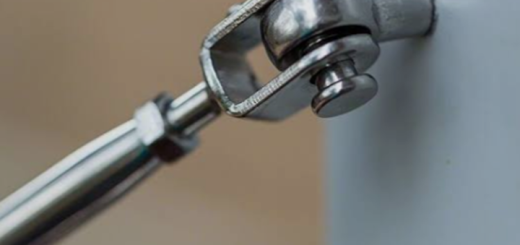
- Turnbuckles. Turnbuckles are adjustable-bodied wire fittings with eye & eye, hook & eye and stub & stub ends that are used to tension, lengthen or secure rope cables. They are one of only two types of fittings that allow builders to make tension adjustments without first removing the cable to relieve tension.
- Bottlescrews. Bottlescrew fittings are similar to turnbuckles in their ability to make adjustments without removing a wire rope’s tension. However, where turnbuckle threads are enclosed in an open-style body, bottlescrew threads utilise a closed-style body that makes them preferable for applications where aesthetics are as important as holding strength.
- Swageless fittings. Instead of using crimps or molten metal, swageless fittings rely on compression-style ends that effectively wedge themselves onto a cable, resulting in a high-strength mechanical connection whose clamping force increases as more tension is applied to the assembly.
Strength, stability and structural integrity are the basis of all steel rope and cable fittings, and Safe Work Australia is a vigorous enforcer of all steel cable and cable fitting guidance. And as even a single instance of cable failure can rapidly evolve into a catastrophic structural failure, builders and contractors have to know what to pay special attention to when installing, inspecting and replacing fitted cables.
Inspection Steps For Maximum Fitting Security and Stability
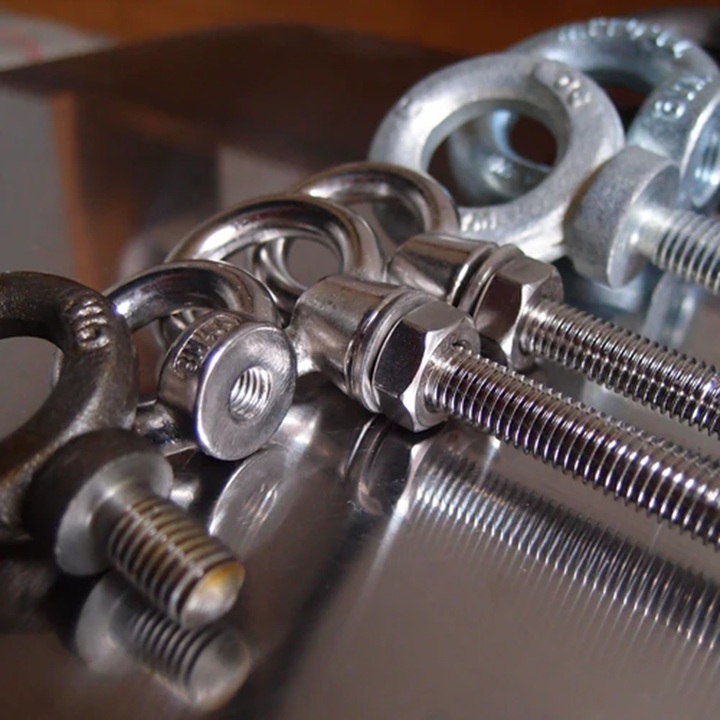
While everything from a cable’s MBS to its abrasion and distortion resistance has to be considered when assessing its suitability for a specific job, it’s the state and condition of the mechanical fittings that’s the most important aspect of cable safety and performance.
This is especially true when cables begin to age. All wire ropes and cables eventually stretch under tension, and builders and contractors need to be sure that their fittings are secure at all times, and that the tension on them is correctly calibrated. These are simple, fitting-related inspection tips that need to be followed for maximum security and stability:
- As all cables need to be inspected for kinking and corrosion, special attention should be given to any signs of broken wires strands leading into the fitting, or damage to the fitting assembly.
- Ensure that the cable-end fittings are properly sized and securely fitted to the cable to prevent cable slippage, or fitting distortion under tension.
- Ensure that suitable pulling grips and tensioning tools are used when disconnecting or reconnecting cables to avoid the risk of potentially life-threatening torque transfers.
Any action that involves inspecting or replacing a wire rope or cable should also be fully documented and the record preserved. And special attention also needs to be paid to making sure that the most recent fitting assembly specs are accurate, and have been correctly verified.
The Final Word
Heavy duty, no-nonsense mechanical cable wire fitting assemblies are available online and can be ordered from anywhere in Australia. They offer the guaranteed structural integrity that every project expects from its cable installations.
With so many different types of mechanical fitting assemblies to choose from, builders and contractors can’t afford to leave anything to chance. The damages that can result from even a single fitting failure can be incalculable, which is why they have to be sure the correct fitting is installed the first time.