4 Types of Exhaust Clamps: When and How to Replace Them
The exhaust system plays a critical role in keeping your vehicle running smoothly and quietly. It guides exhaust gases from the engine through a series of pipes and mufflers before releasing them safely through the tailpipe. Along the way, it helps control emissions, reduce noise and maintain proper engine back pressure. The parts of a stock or aftermarket exhaust system are held by clamps. These clamps create strong connections between sections of pipe and components such as mufflers, resonators or catalytic converters. Without them, your exhaust system wouldn’t stay sealed or in position.
Types of Exhaust Clamps
There are different types of clamps for exhaust systems, each designed for a specific purpose. Knowing how they vary can help you pick the right one for your setup and get a secure fit.
Band
Band clamps are one of the most common choices for exhaust connections, especially on performance cars. They use a wide stainless steel band with a bolt mechanism that tightens around the pipe to create a leak-proof seal. Band clamps are ideal for joining straight pipe sections or connecting slip joints without distorting the metal. They look neat, are easy to remove and are reusable. Many enthusiasts prefer this style when installing aftermarket systems because they provide a clean, professional finish while keeping the pipes perfectly aligned.
V-Band
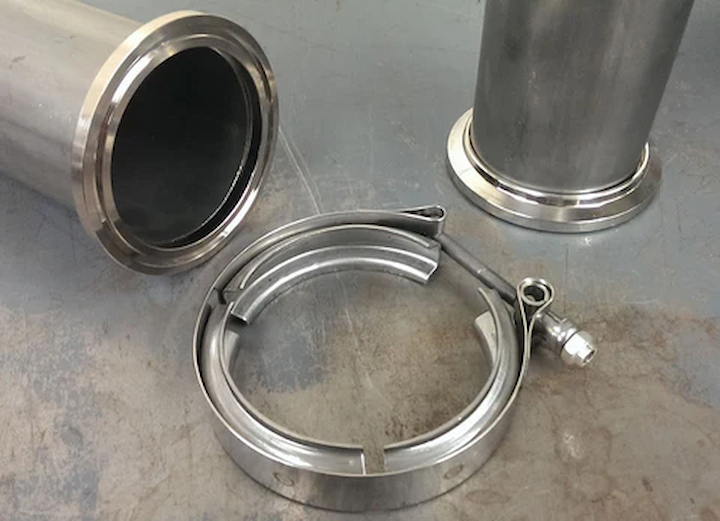
V-band clamps are typically found on turbocharged or high-performance applications. They consist of two V-shaped flanges joined together by a circular clamp and a single fastening bolt. This design provides a secure, airtight connection that can easily be disassembled when needed.
V-band clamps allow for quick maintenance or modifications without damaging the tubing, making them ideal for systems where parts are often removed. Car exhaust clamps of this type are also less likely to loosen under high heat or vibration, which is why they’re popular among performance car builders.
U-Bolt
U-bolt clamps are the oldest and most basic design still widely in use. They feature a U-shaped bolt that wraps around the pipe, pressing a saddle against the joint as the nuts tighten. While they provide a strong grip, they can slightly crimp or deform the pipes, which can make removal difficult later.
However, they remain a low-cost and reliable choice for standard exhaust repairs. You’ll often see them on daily drivers or older vehicles. When it comes to affordability and simplicity, the U-bolt clamp remains a dependable solution.
Ball & Socket
Ball and socket clamps connect two exhaust sections using a spherical and cupped joint, allowing some flexibility for alignment. This design helps prevent leaks while reducing stress caused by engine movement or vibration. The ball end fits into the socket and is tightened using a special clamp that keeps the seal snug. These clamps are often found closer to the manifold or catalytic converter, where movement and heat are higher.
When to Replace an Exhaust Clamp
Noise
If you start hearing new rattles or loud exhaust sounds, it may mean a clamp has loosened or corroded. Since clamps for exhaust systems hold everything tightly sealed, even a small gap can cause a hissing or vibrating tone when driving.
Vibration
Noticeable vibration under the car or through the steering wheel often points to a failing clamp. When an exhaust clamp loses its hold, the pipes shift, leading to vibration and even knocking against the frame or floor pan.
Damage
Rust, cracks or missing bolts are clear signs that replacement is due. Exhaust components are constantly exposed to heat, moisture and grime, which can weaken the metal over time. Inspect each clamp regularly to avoid bigger issues.
Performance
Loss of back pressure or leaking connections can affect how your engine performs. Reduced acceleration, fuel efficiency drops or a rough idle might all stem from small exhaust leaks that a new clamp can often fix.
How to Replace an Exhaust Clamp
- Prepare – Allow the exhaust to cool completely before working on it. Jack up the vehicle securely and inspect the system to identify the problem area. Gather the correct size replacement exhaust clamp and appropriate wrenches.
- Remove – Loosen and take off the old clamp. If it’s rusted, use penetrating oil or cut it off carefully with a hacksaw. Clean off any rust, dirt or old sealant from the joint.
- Position – Fit the pipes together properly and slide the new clamp over the joint. Make sure everything sits evenly before tightening.
- Tighten – Gradually tighten both bolts evenly to ensure a balanced seal. Avoid over-tightening, as too much pressure can warp or crack the pipe.
- Check – Once everything is secure, start the engine and listen for leaks or rattles. Inspect visually to confirm your new exhaust clamps are seated firmly and aligned properly.
Final Words
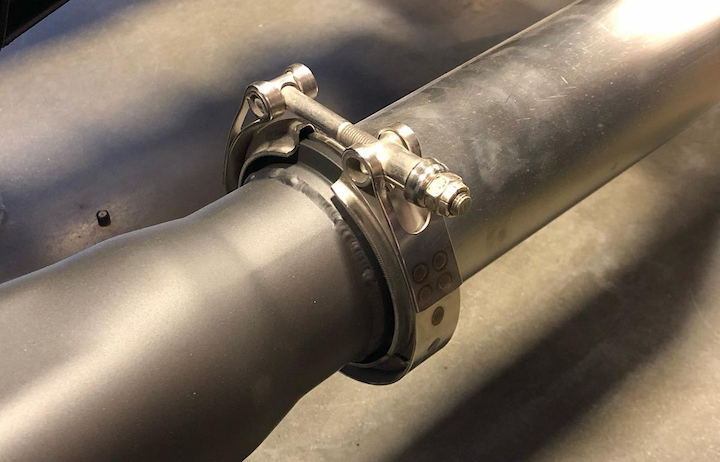
Exhaust clamps may seem like small and simple components, but they hold the entire exhaust system together. Choosing the right type and replacing them when necessary ensures your vehicle runs quietly, efficiently and safely. High-quality car exhaust clamps can make all the difference in keeping your car’s performance and reliability at their best.