Storing Hazardous Materials Safely: A Guide to Chemical Storage Cabinets
Hazardous chemicals are a reality of life in many industries, including manufacturing, mining, healthcare, agriculture, and education. Wherever these chemicals are present, the issue of how to safely store them becomes a matter of critical importance. Chemical storage cabinets are one of the most common solutions, and understanding how they work is important for maintaining a safer work environment.
What Is a Chemical Storage Cabinet?
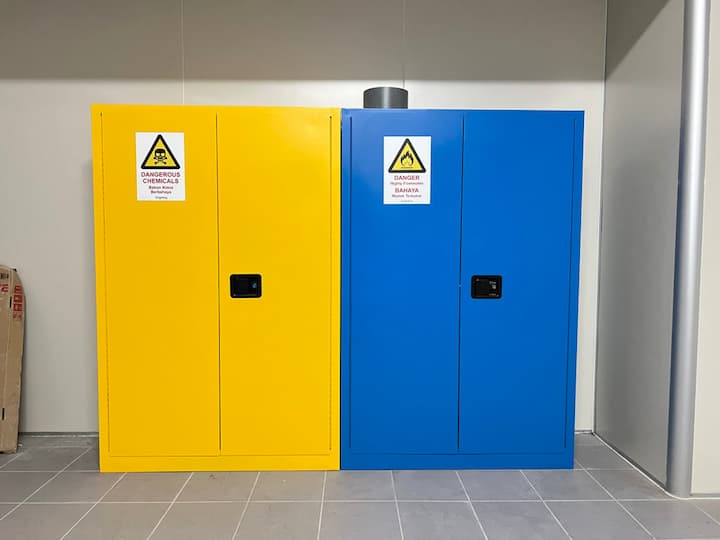
A chemical safety cabinet is a type of equipment designed and built for the purpose of safely storing hazardous chemicals or dangerous goods. At their most basic level, these types of cabinets are physical barriers between hazardous materials and people, property, and the environment.
Chemical storage cabinets are not your typical shelving units or cupboards. They are designed to counter the specific dangers that different types of hazardous substances pose, whether it is fire, toxic vapour, corrosive substances, or explosive reactions.
Selecting an efficient storage cabinet for chemicals that complies with the Australian Standard means that you will be benefiting from the various specialised safety features. These may include spill and vapour containment, thermal air barriers, and doors designed to minimise chemical hazards, such as automatic self-closing doors or doors that release when there is pressure inside the cabinet.
Why Are Chemical Storage Cabinets Important?
Inadequate storage of dangerous materials leads to a chain reaction of potential hazards: fires and explosions due to flammable vapours, toxic poisoning from leaking containers, chemical burns from corrosive spills, and adverse reactions from incompatible materials coming into contact with each other. Such incidents can cause serious harm to employees, severe property damage, and disastrous environmental pollution.
Apart from the actual physical dangers, there are severe legal and procedural repercussions for non-compliance. Inadequate storage can potentially endanger the health and safety of your workplace, leading to penalties for non-compliance.
In Australia, chemical storage cabinets are required to be designed in accordance with the relevant Australian Standards, with different standards applying to each class of dangerous goods. These standards outline the minimum requirements for safely storing hazardous substances and help set the legal and safety baseline for workplaces handling these materials.
Types of Storage Cabinets for Chemicals
Different chemicals carry different risks, which means there is no generic storage solution. The cabinets are designed to cater to specific classes of dangerous goods.
Flammable Liquid Storage Cabinets
These are the most commonly required types. They are designed to store Class 3 flammable liquids, such as solvents, fuels, alcohols, and other similar substances, which pose a serious fire and explosion risk.
They are also designed with double-walled, fire-resistant steel, self-closing doors, and ventilation systems, as well as high-capacity spill containment sumps to capture and contain spills. They come in capacities from 15L to 250L, with large capacity models up to 850L, including models for pallet storage.
Corrosive Storage Cabinets
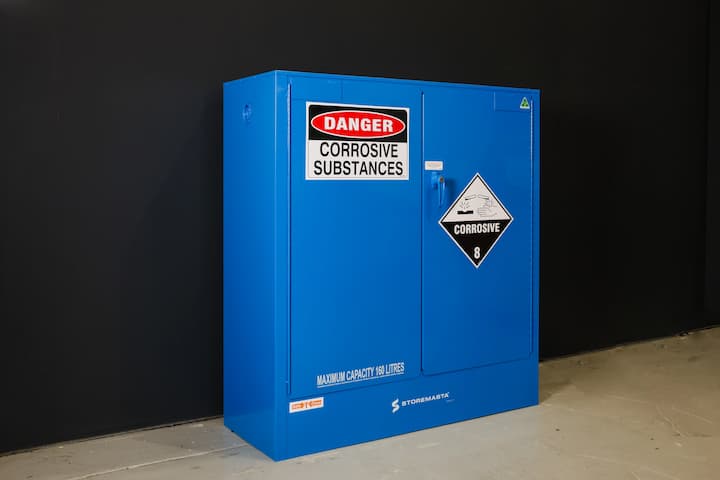
Corrosive storage cabinets are designed for Class 8 corrosive materials, like acids and alkalis, which can destroy human tissue and equipment if not stored correctly. There are two different models of corrosive safety cabinets available: polyethylene storage cabinets, designed specifically for the storage of harsh corrosive chemicals such as sulphuric acid, and metal corrosive cabinets, designed for the storage of less corrosive chemicals, made from heavy-duty sheet steel with a high-build powder coat finish, with shelves that have PVC spill trays.
Toxic Substance Cabinets
Addressing Class 6 substances, which are toxic even in small amounts and can be harmful or fatal, the toxic cabinets are essential for facilities working with these materials. Look for cabinets that are fully compliant with the requirements of Australian Standard AS/NZS 4452, ensuring they are safe for the storage of all Class 6 toxic substances like cyanides, phenol, lead compounds, and cresols.
Outdoor Chemical Storage Containers
These cabinets are designed for organisations that require the storage of larger quantities of dangerous substances outside the main building. They help control risk by protecting stored goods from hazards and exposure in outdoor environments, including harsh weather conditions. Outdoor storage solutions are available in capacities ranging from 250L to 850L for cabinet-style storage, as well as drum or IBC storage systems that can accommodate volumes of up to 12,000L.
Applications in Various Sectors
Storage cabinets for chemicals are required in the following sectors:
- Industrial and manufacturing units use flammable liquid cabinets to safeguard the production floor against fire hazards posed by solvents and fuels used in cleaning, coating, and processing procedures.
- Laboratories and research institutions use a combination of flammable, corrosive, and toxic storage cabinets to handle a variety of chemicals used in experiments and analysis.
- For pharmaceutical manufacturing units, the fire-resistant construction and spill containment properties of these cabinets are highly beneficial.
- In educational labs of schools and colleges, student safety can be encouraged by storing flammable chemicals used in experiments in secure and well-ventilated cabinets.
- In the medical field, corrosive and toxic cabinets are employed to store cleaning agents and laboratory chemicals safely.
- The mining, construction, and infrastructure sectors employ larger outdoor chemical storage cabinets to handle large quantities of flammable, corrosive, and oxidizable materials on construction sites.
Selecting the Right Cabinet
Understanding the class of your dangerous goods is crucial so that you can select the right storage cabinet for chemicals. The class can be identified by looking at Section 14 of your safety data sheet (SDS), as well as storage conditions in Section 7. Once the class or subdivision of dangerous goods has been determined, consider the size of the cabinet.
It is also important to note that even among the same class of dangerous substances, there may be some that are not compatible with each other. It is therefore important to ensure segregation both in and between the cabinets.
Chemical storage cabinets are not afterthoughts or luxuries but are instead a crucial part of any sound dangerous goods management plan. Spending money on the right cabinet is therefore an investment in the safety of your people and your property.