Metal Framing 101: Uses, Benefits and Buying Considerations
Metal channel framing, also known as strut channel or Unistrut, is a common construction system frequently used in commercial and industrial construction applications. It comprises a series of steel channels, fasteners, brackets and fixings, providing consistent strength, high structural support and long-term performance, especially when compared to traditional building methods and materials.
What are the Key Components of Metal Framing Systems?
Central to metal framing systems are U-shaped metal channels or struts, spring-loaded channel nuts, and a variety of steel fixings, including base plates, brackets and beam plates. The system is preferred in partition walls, roof and ceiling construction due to the modular design, versatility and adjustability to changing project needs.
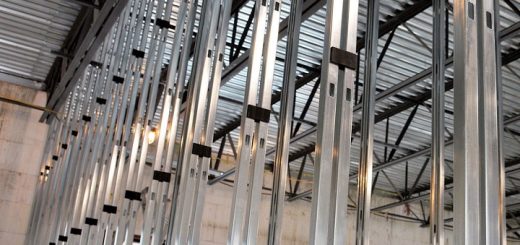
U-shaped strut channels or tracks, either in solid or slotted configurations, are the horizontal members that comprise the structural foundations fastened to the floor or ceiling. These act as a guide or “track” for C-channels, or the vertical members that slide into the tracks. The unique profile, consisting of a web and flanges, ensures structural strength and rigidity.
C-channels can be added at pre-determined lengths along the length of the tracks, and fixed in place with specialized channel nuts with serrated grooves, often with a spring-loading mechanism. The latter provides a secure anchoring point, correct alignment and helps with faster installation times.
Versatility is added with various fixings and brackets, ranging from 90-degree angle brackets when creating corner joints, flat plates for joining two adjacent channels, pipe clamps and hangers in conduit runs and plumbing, and post bases when anchoring vertical C-channels into concrete or masonry.
Common Uses
The modular design allows versatility across multiple applications:
- Support for electrical conduits and cable management: Metal framing systems built around strut channels are widely seen in large conduit runs, cable trays, and other cable management systems in both commercial and industrial settings. Channel systems can be modified, expanded or reconfigured without the need for complex changes or additional work. Moreover, slotted channels eliminate the need for welding and simplify maintenance, while providing a neat and organized layout.
- Plumbing and pipe hangers: Branded Unistrut and Superstrut framing provides support for horizontal and vertical pipe runs, gas lines and drainage pipes. It can also accommodate heavy equipment, such as water heaters, boilers and pumps. Hot-dip galvanized or stainless steel channels and components additionally provide corrosion resistance. The modular design also means easy reconfiguring or retrofitting existing plumbing to accommodate changes and additions.
- HVAC framework: Heating, Ventilation, and Air Conditioning (HVAC) systems rely on robust metal framing solutions, such as channel-mounted suspended trapeze hangers when supporting heavy ductwork, piping and HVAC units.
- Industrial racking, shelving and storage: Strut channels are key components when constructing racking and shelving to support heavy industrial equipment, ranging from conveyors and control panels to pumps and compressors. They are also key components in warehouse storage units, building adjustable workshop benches and workstations and trolley systems seen in heavy-duty material handling.
- Ceilings and suspended structures: The high loading capacity of metal frame systems provides rigidity and support for suspended ceiling grids. drywall and decorative ceiling elements. Similarly, in hospitals and healthcare, metal framing systems are used to mount radiology equipment, imaging systems, surgical lights and ceiling-mounted patient lifts, among other fixtures.
- Partition walls: Strut channel systems create robust frames for vertical partition walls, decorative screens, industrial cladding, metal panels and guard systems in both commercial and industrial applications. Existing space and walls can also easily be reconfigured, relocated or dismantled, ensuring versatility and sustainability.
Benefits of Metal Framing Systems
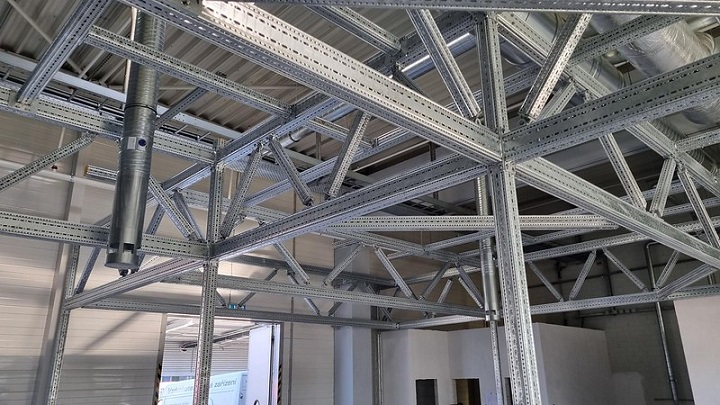
Metal framing provides multiple benefits, especially when compared to traditional wood framing structures:
- Strength and durability: The use of hot-dip galvanised or stainless steel ensures high load capacities, fire and corrosion resistance, and prolonged structural integrity with no warping, shrinkage or cracking.
- Fast installation: Metal channels can be assembled on-site or prefabricated to cut overall installation times, with lower labor costs.
- Weather and pest resistance: Treated metals are immune to common issues like termite and pest infestations and handle changing humidity and temperatures better than wood and other framing solutions.
- Flexibility: Channels can be optioned in standardized or custom lengths and widths, or in slotted, solid, single or double-wall varieties to suit different project needs or ensure additional strength.
- Sustainability: Both galvanized mild and stainless steel, and aluminum seen in lower load-bearing applications, can be recycled and repurposed. This reduces waste.
- Consistency: Metal channels are fabricated to be perfectly straight, providing consistent and clean results with seamless joints and tight tolerances. This ensures structures stand the test of time.
Main Buying Considerations
Load-bearing capacity, channel types, and materials are the main buying considerations. Load capacities are generally determined by channel gauge or thickness, with 12-gauge steel (0.105″) seen in heavy-duty applications, and 14-gauge (0.075″) and 16-gauge (0.06″) in low to medium-duty uses. Standardized lengths (10 and 20 feet) or 3-meter struts in metric uses are most common. These tough can be cut to size. Widths are usually 1-5/8″ (41mm), with channels in varying depths, depending on the application.
Choose between solid strut channels if maximum strength is a priority, or slotted strut channels if easy installation or adjustability are key considerations. And ensure metals are sourced for the right use. Pre-galvanized steel is seen in indoor usage, hot-dip steel (with higher corrosion resistance) for outdoor applications and costlier stainless steel in harsh and corrosive settings. Where weight is an issue, struts and framing can also be purchased in lightweight aluminum.