A Simple Guide to Choosing a Kitchen Cutting Board
Does your cutting board still smell funny even after carefully cleaning it and washing it? Or perhaps it has changed colour from all the food you cut on it? If so, this is your sign to buy an additional cutting board, or two.
While having more than one is important to reduce smell, what’s even more important is preventing cross-contamination. This usually happens if you’re cutting raw meat, poultry, fish, fruit and veggies on the same board. Luckily, this can be easily avoided by investing in different chopping boards, one for meat, one for fruit/veggies, and one for bread.
Types
Bamboo
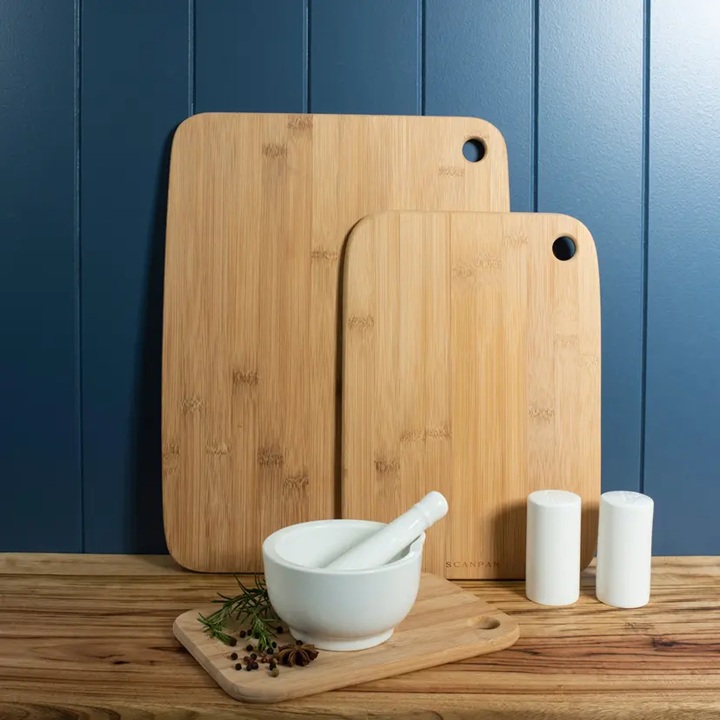
This is certainly one of the most commonly used types of kitchen chopping boards over the years. It’s sustainable, appealing, lightweight, durable and hygienic, perfect for the purpose.
Given the fact that bamboo is a renewable material, these boards are considered one of the most eco-friendly options available on the market. They can even be compared to steel as they’re super durable and long-lasting, resistant to scratches. Bamboo is also non-porous, and when compared to its scratch-resistant property, this makes it one of the most hygienic options available on the market.
Even though knives can’t easily scratch it, this doesn’t mean that bamboo is hard on them. That’s because bamboo is a non-abrasive material, which makes it impossible to dull your knives.
Bamboo boards are considered one of the most affordable wooden options on the market, mainly because bamboo is a renewable and fast-growing type of tree.
Wood
Wood is the oldest type of material used for the purpose, and for a reason. It’s a super durable, strong and quality material that can also take pride in its antibacterial properties, making it the ideal option for designing chopping boards. Wooden boards also have antimicrobial properties designed to absorb moisture, trap and kill bacteria, making them safe and hygienic. Just like bamboo, wood is also a natural material, and boards made from it are considered biodegradable, sustainable and Eco-friendly.
Unlike bamboo, wood can easily scratch; however, those smaller cuts and grooves can disappear over time. Investing in a chopping board made from high-quality wood means that you can use it literally for a lifetime. All it takes is taking proper care of it.
The best option available on the market is the end-grain boards, as they are not only thick, but they are also constructed better. They’re gentle on knife edges, self-healing and perfect for being used for years to come!
Plastic
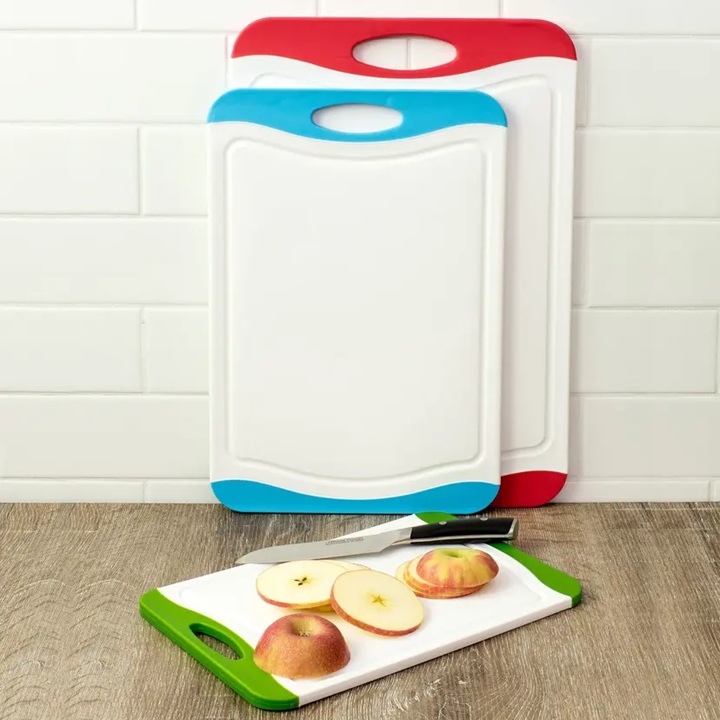
Plastic boards for cutting are another popular option on the market, mainly because of their affordability and ability to be tossed in the dishwasher. They are practical and easy to use, lightweight and resistant to moisture absorption.
Even though it’s said that they are easier to maintain and sanitise, they pose health and environmental risks. Given the fact that they are prone to scratches and deeper grooves, this is the perfect place for bacteria to harbour, which unfortunately can end up in food. They are also known as types of boards that can shed plastic into food , which can pose a danger to health.
Lastly, these boards can also trap bacteria, and unlike wood, they don’t have the needed properties ot kill it, and they pose a greater chance of cross-contamination. The most common bacteria found in these boards are Salmonella and E.coli that cannot be removed even after thorough washing.
Things to Consider When Choosing
Size
Aside from the material, size is one of the most important things you should take into account when searching for the right chopping boards. Ideally, you should have boards of all sizes, however, make sure they correspond with the size of the goods you plan ot cut on them. Regarding the thickness, the thicker the wood/bamboo, the better.
Colour/Design
Both wood and bamboo are natural materials; this means that each kitchen cutting board is unique. Each piece will have a distinctive design and pattern, making it hard to copy. Some of them can be darker while others lighter, some of them will have more design while others almost none. This option gives you the freedom to explore and compare before you find the one that’ll meet your taste.
Hygiene
If wondering what is the most hygienic cutting board, wood and bamboo are considered the safest and most hygienic. They allow for being washed with hot water and soap, and also allow for being disinfected with salt, lemon juice and baking soda.