The Appeal of Australian Aboriginal Clothing: From Tradition to Contemporary Fashion
There is something magical in putting on an item of clothing that carries thousands of years of stories woven into its fabric. Aboriginal clothing is not just about fashion; it is a vibrant conversation between past and present, a wearable testament to the world’s oldest continuous culture. For more than 65,000 years, First Nations peoples in Australia have made garments that reflect deep and abiding connections to Country, culture, and community. Today, Aboriginal fashion is experiencing a renaissance that bridges ancient traditions with contemporary design, sparking a movement on the global runways.
Traditional Aboriginal Clothing
Aboriginal people throughout Australia adjusted their clothing to the vast variations in climate, from tropical northern regions to the deserts and the temperate south. In warmer areas, minimal clothing, often only a few woven belts, headbands, and decorative accessories, proved practical. In cooler regions, people donned cloaks made of kangaroo or possum skin, sewn together with great care and embellished with intricate designs narrating stories of identity, Country, and ancestry. These were more than clothes for keeping warm; they were storytelling canvases. The deep authenticity in Aboriginal Australian clothing links wearers to stories about land, animals, plants, and ancestral beings that have sustained communities through millennia.
The Contemporary Renaissance
Fast forward to today, and Australian Indigenous fashion is having its moment in the sun. The revival of traditional clothing forms had begun in the mid-1990s, celebrating cultural expression and pride. In the past twenty years, there has been an extraordinary blossoming of Aboriginal fashion.
Today, Aboriginal fashion designers create in every genre, from high-end couture to streetwear, and from sustainable everyday wear to ceremonial garments. They are incorporating traditional techniques such as weaving and natural dyeing with state-of-the-art technology. Some designers modernise textiles with traditional ochres, while others translate the ancestral dot paintings into digital prints on contemporary silhouettes.
This movement is different because it refuses to be bound by the past. These designers are honouring tradition while boldly experimenting, proving that Aboriginal culture is living, evolving, and thoroughly contemporary. They are taking back the narratives, creating economic opportunities for their communities, and showing the world that Indigenous fashion belongs at the forefront of global design innovation.
What Makes Aboriginal Fashion So Appealing?
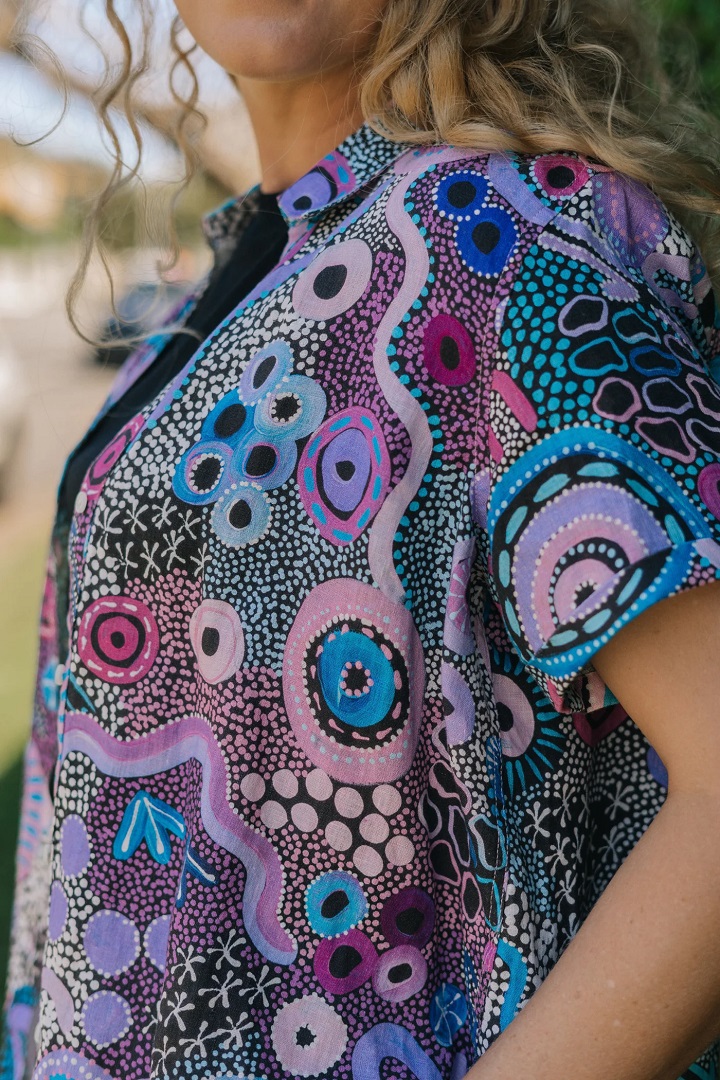
Walk into any marketplace featuring Aboriginal designs, and you will instantly understand the appeal. The colours! Bold ochres, brilliant blues, earthy reds, deep blacks. The patterns seem to dance across the fabric. These designs, made in collaboration with Indigenous First Nations artists, transform everyday clothing into wearable art.
The aesthetic power of Aboriginal art translates beautifully to fashion. Bold dot paintings, flowing lines representing waterways, earthy ochre tones, and vibrant contemporary colour palettes create visually striking garments that will stand out in any wardrobe. From casual tees to elegant silk scarves, from fashionable, colourful polo shirts to accessories, these are not just beautiful, decorative patterns but visual languages that can tell complex narratives.
Aboriginal-designed fashion represents a tangible connection to Australia’s authentic cultural heritage for many. It’s one way to acknowledge and support the world’s oldest continuing culture while offering truly unique, conversation–starting pieces with real meaning.
Can Non-Indigenous People Wear Aboriginal Clothing?
This is where the majority of people hesitate, and it’s a fair question to ask. Most Aboriginal designers create their fashion lines to be worn by all people. They view their work as a bridge – a way of sharing culture, educating, and building cross-cultural understanding.
Wearing garments that Aboriginal artists have designed and are being paid and credited for is not only acceptable but actively encouraged by many Indigenous creators. By buying and wearing their products, you’re supporting and promoting awareness and understanding of Indigenous cultures. When you purchase from ethically sourced retailers, your purchase helps economically support Indigenous artists, families and communities.
When Aboriginal designs are reflected in the world, it means Indigenous people are not invisible in the landscape. And with meaningful designs comes more conversations. Just imagine wearing a beautiful piece of art that leads to discussions about culture, connection, and reconciliation; that is what authentic Indigenous fashion has the power to be.
Appreciation vs. Appropriation: Know the Difference
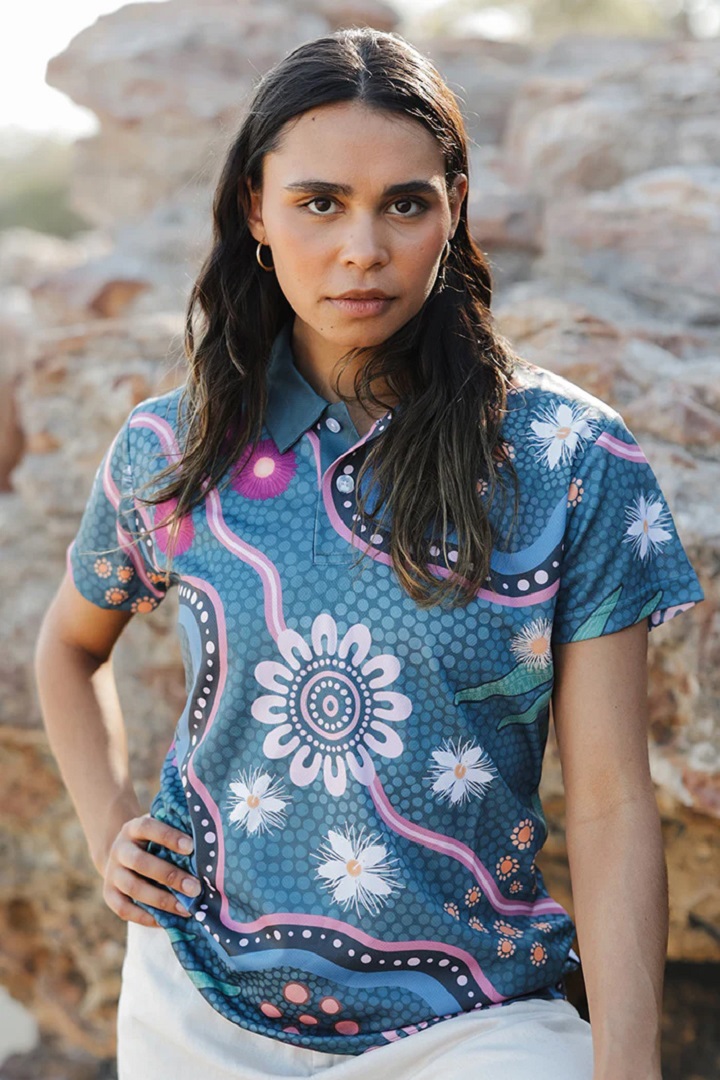
Here’s the important difference: Indigenous art cannot be separated from culture and Country, and must be worn with respect for and understanding of the culture that the work represents. That means:
- Buying from Indigenous-owned businesses or ethical retailers who pay fair royalties to artists
- Learning the story behind what you are wearing
- Being prepared to share that knowledge when people ask about your stunning garment.
- Understanding that some ceremonial or sacred designs are not considered appropriate for commercial fashion purposes.
Wearing Stories, Creating Connections
Aboriginal Australian clothing is one of those rare things in our globalised world: a fashion movement that draws from the oldest continuing culture on the planet, expressed in contemporary designs. It’s fashion with purpose, style with soul, and garments that connect. It is more than just items of clothing, but a connector of cultures and a conversation about Country when worn with respect and understanding. So yes, wear that beautiful Aboriginal design. Wear it proudly, wear it respectfully, and most of all, wear it knowing you’re supporting artists, keeping culture alive, and carrying forward stories that have been told for tens of thousands of years. That’s fashion worth celebrating.