Your Guide to Jockey Wheels for Caravans
Modern caravans and camper trailers are already decently equipped straight from the dealer, but it’s the small details that make the biggest difference. Jockey wheels might not top accessory shopping lists when kitting your caravan or trailer for the ultimate road trip. However, their outsized role in safely hitching and unhitching, and in keeping towed vehicles level when parked, far outweighs the modest asking price.
What is a Caravan Jockey Wheel?
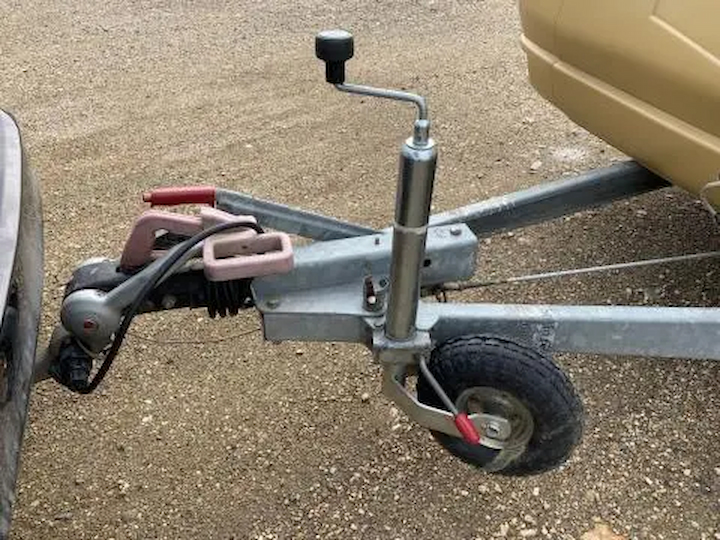
Jockey wheels are simple mechanical assemblies that attach to caravan and trailer drawbars and help support, lift and maneuver them when not attached to the tow vehicle. They consist of several parts: a height-adjustable inner tube slotting in a fixed outer casing, a winding crank that moves the inner tube, a solid rubber or pneumatic wheel, and a mounting bracket or clamp that attaches the assembly to the caravan or trailer drawbar. Well-made jockey wheels for caravans focus on strong, corrosion-resistant materials, versatile height adjustment for varied terrain and caravan types, and functional extras like swivelling brackets that move out of the way and provide increased ground clearance on uneven terrain.
Why You Need One?
Jockey wheels solve several key problems when safely handling and parking caravans and trailers. Key issues they tend to include:
- Difficulties in hitching and unhitching: A caravan jockey wheel can safely raise and lower the front of a caravan or trailer to perfectly align with the coupling or hitch in the tow vehicle. They provide faster and easier hitching and unhitching, especially in heavily loaded caravans and trailers.
- Maneuvering by hand: Moving caravans and trailers is tedious without a well-appointed jockey wheel. These assemblies make it easier to manoeuvre towed vehicles, especially in tight spaces such as caravan parks and storage areas.
- Stability when parking and on uneven ground: The choice of solid rubber or softer, air-filled wheels ensures stability. Choose pneumatic wheels when moving trailers and caravans across loose surfaces, such as sand and mud. Or solid wheels on hard-packed turf to avoid punctures.
- Poor front-to-end levelling: Jockey wheels help keep caravans level. This is important for the safe and uninterrupted operation of essential appliances such as water heaters and fridges.
- Compromised ground clearance: Innovative designs, such as stow-away swivelling brackets, provide the towing clearance on trails and roads littered with debris and obstacles.
Common Jockey Wheel Types
There’s a wide variety of caravan jockey wheels, so an informed purchase will make a significant difference to your caravan and trailer setup routine. Jockey wheels differ in design, materials, intended usage and trailer and caravan compatibility for different types of terrain. Common types include:
- Standard: These are the most common variety, featuring a fixed manual hand crank to lift and lower caravan and trailer drawbars. Most are equipped with solid wheels, providing stability across different types of terrain.
- Swivel bracket: Choose a swivel bracket jockey wheel if you need space-saving ease of use and a caravan attachment that increases off-roading ground clearance. The name is derived from the pivoting swivel bracket that swings the wheel into a horizontal position, with lock pins providing added security.
- Ratchet: Ideal for larger and heavier setups, a ratchet jockey wheel features a long ratchet handle slotted into the wheel. This can be used to move trailers and caravans forward or backward. The mechanism is especially useful in tight spots and uneven ground.
Of course, difference in materials and designs means jockey wheels for different trailer and caravan weight classes. Choose light-duty jockey wheels in zinc-plated steel with shorter and thinner clamps for smaller single-axle caravans (up to 750 kilos) and light vehicle and machinery trailers. Move up to a sturdier stainless or galvanised steel build, with beefier clamp assemblies in medium-duty types capable of supporting heavier single-axle or smaller dual-axle setups weighing up to two tons. For commercial use, consider jockey wheels with thicker and tougher 60 or 63-mm serrated clamps and solid metal shafts when positioning, supporting and moving trailers up to 3500 kilos.
Key Buying Considerations
Important factors to consider when purchasing jockey wheels for caravans and trailers include rated load capacity, wheel configurations, mounting styles and height adjustability.
Load capacities or weight ratings refer to the total tow ball or hitch weight with caravans or trailers fully loaded. This translates to standard jockey wheels capable of safely supporting between 150 and 300 kilos and heavy-duty types capable of supporting up to 500 kilos in tandem trailers or larger caravans. Also consider jockey wheels built specifically for heavy off-road use, with capacities well exceeding 500 kilos.
Choose between single wheel setups for lower weight and easier maneuverability, or stockier dual-wheel jockey wheels when stability on soft ground is paramount. Similarly, opt for solid rubber tyres on concrete, asphalt and packed trails or pneumatic air-filled tyres for grass and sand.
Determine functionality and ease of use with fixed clamp or weld-on jockey wheels, or consider the convenience of swivel designs for simple and quick positioning. Lastly, consider height adjustment and total travel range to achieve the required clearance for safe hitching and unhitching.